Printing & Design / September 13, 2026
From Plate to Press: What Printing Reveals About a Map
An old map is a print before it is a picture: the process that made it is still legible in the sheet.
01
The process leaves a signature
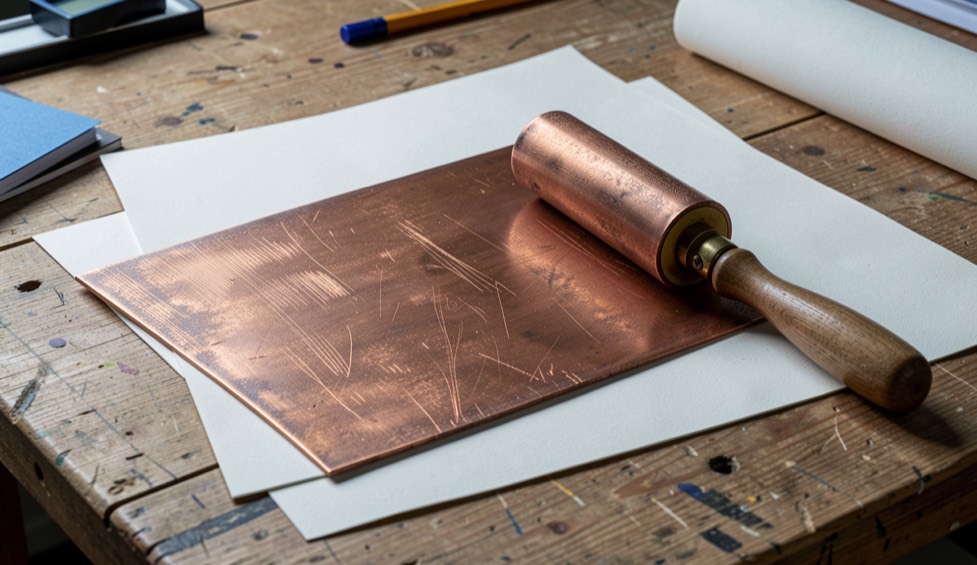
Every antique map is a print before it is a picture. A woodcut sheet carries the bold line of a raised block; an engraved plate holds ink in recessed lines and leaves a platemark around the image; a lithographed map sits flatter on the paper and can carry tonal crayon work. The process decided how fine a coastline could be, how much text a plate could hold and how many copies a publisher could pull.
That evidence is still legible for a modern reader. For a view of the objects themselves, The Cartographer’s Folio keeps a plate-by-plate notebook on five centuries of printed maps, naming who made each sheet, when and why it still matters.
02
What the printroom still borrows
A team reproducing a historic map faces the same questions as any print buyer: which process, which surface, which colour condition and which finish. The difference is that the original already answered those questions once, and its answers are part of the object’s value.
Read the original before writing the reproduction brief. The sheet’s line quality, paper tone and fold pattern are a specification the facsimile should respect or consciously change.
03
Read the impression before the story
A platemark, a visible bite of ink or a flatter lithographic surface are physical clues, not decorative ones. Relief, intaglio and planographic routes each leave a different kind of evidence, and that evidence can date or qualify a sheet as surely as the cartouche does.
Hand-applied colour complicates the reading. Colour added after the impression belongs to a different pass, so a map can carry a printed skeleton and a painted surface that age differently.
04
Condition is a production question
Folds, mounting, trimming and later repairs change how a printed map survives. A fold from an atlas binding, a linen backing or a trimmed platemark all describe how the object was used, and each one sets a limit on how the sheet can be handled or reproduced today.
Record the condition in the same language a print brief would use: surface, marks, previous interventions and the areas where detail has already been lost.
05
Keep the reproduction honest
A facsimile brief should name the source scan, the permitted size, the colour condition, the stock and the finish. If the reproduction deliberately departs from the original, say a flatter stock, a cleaned background or a different size, say so in the job record rather than letting the press decide.
The working sources for this note are IMCoS collecting guidance for antique maps and ISO/TC 130 process guidance, read alongside the Printroom library. Collecting guidance describes the object; process guidance describes the production condition; the practical steps here are editorial synthesis.
06
The same catalogue habit on a hardware bench
A map archive and a diagnostic archive answer the same question: which version, built when, for which machine. A companion note on building a live diagnostic USB key applies that catalogue discipline to a bootable toolkit and its release archive from 2003 to 2015.
The connection is worth keeping because both records fail the same way: a version that cannot be described cannot be chosen, whether the object is a seventeenth-century plate or a rescue image on a key.
Source trail
IMCoS collecting guidance; ISO/TC 130 process guidance; editorial synthesis. Read the editorial method for the difference between a standard, an archive observation and practical synthesis.