Workplace Systems / July 13, 2026
Time and Attendance Equipment
An exact historical address for a subject that still belongs in the workplace-systems room.
01
The system around the device
Time and attendance equipment only makes sense with a record owner, a correction path and a retention question.
02
Read the current brief
The buyers guide turns the historical subject into a vendor-neutral checklist.
03
Start with the workplace event
Time and attendance equipment is only meaningful when the workplace defines the event being recorded. It may be a start, finish, break, shift change, job allocation or an exception that needs a supervisor's review. The historical TA path is retained for that subject signal, then reframed around the record and the people who use it.
Write where the event happens, who enters it, who can correct it, which report is needed and what happens during an outage. The device is downstream of those questions. A familiar clock does not solve an undefined record.
04
Compare capture methods
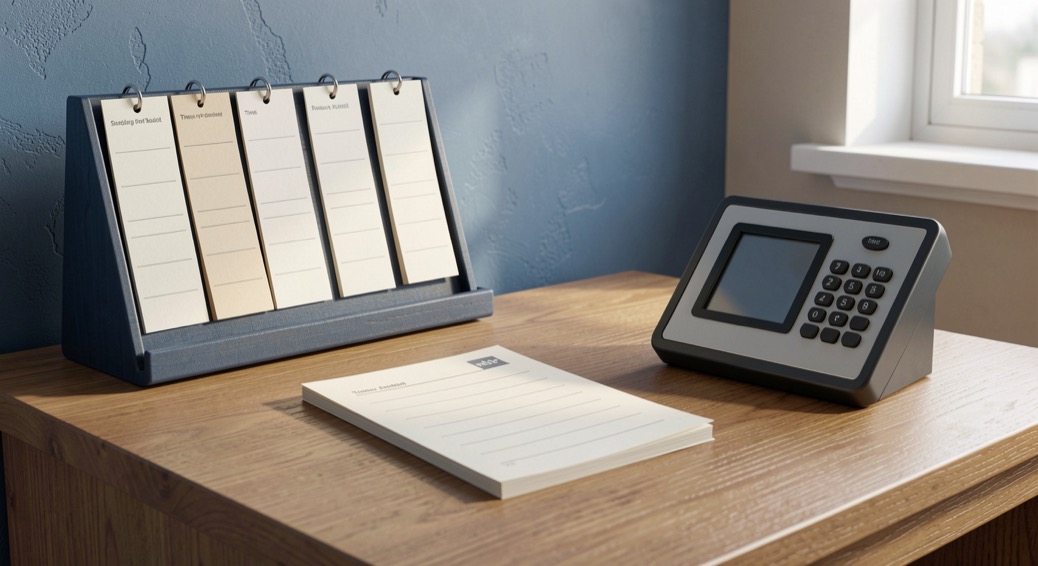
A physical clock card can be visible, local and inexpensive to understand, but it requires manual collation and secure storage. A badge or connected terminal can speed capture and reporting, while adding identity, permissions, network, support and data-protection concerns. A computerised record may reduce paper but increase integration and migration work.
Compare correction, approval, reporting and downtime as carefully as capture. A system that records an event quickly but makes a missed punch difficult to explain may create more operational work than a slower routine with a clear local owner.
05
Build a buyer test
Use one ordinary shift and one exception to test a proposed system. Demonstrate an incorrect entry, a supervisor correction, a report, a lost badge or card, a network outage and a new worker. Record which action is visible, which permission is required and how the record is preserved for later review.
For a small workshop, the test may show that a card and badge rack are easy to reconcile at one entrance. For several sites, a central report may be worth the added identity and support work. The decision should be based on the workflow the organisation can operate, not the most impressive screen.
06
Avoid the procurement mistakes
Do not treat an old model name as a current product recommendation, and do not compare devices without counting licences, consumables, replacement, export, support and integration. Do not assume a badge format, reader, printer or rack will remain compatible after a change of system. Write the current interfaces and owners into the brief.
Keep legal and employment requirements out of an invented one-size-fits-all answer. Confirm local rules, access rights, retention and correction practice with the responsible specialist. Equipment can support a policy; it cannot create one.
07
Respect the restored URL
This historical page preserves a subject and a link path, not a current specification, certificate, vendor claim or legal recommendation. Use it to frame a neutral conversation, then verify the present equipment, security, accessibility, support and retention conditions with the workplace team and supplier.
The source trail is the Wayback URL inventory, general systems guidance and the Printroom's buyer brief. Read the related time-attendance article for a fuller comparison, and read the method page for how historical evidence is kept separate from present-day procurement advice.
08
Record the handoff
A buyer should leave the discussion with more than a device name. Keep the event map, correction owner, report example, downtime procedure, data boundary and test result beside the quote. That record makes future changes safer because the organisation can ask whether a replacement still preserves the workflow rather than assuming a similar-looking terminal is equivalent.
The release question is practical: can the responsible supervisor explain what happens on an ordinary shift and on the first exception? If not, keep the procurement open and test the missing step before selecting hardware.
Source trail
Wayback URL inventory. Read the editorial method for the difference between a standard, an archive observation and practical synthesis.