Workplace Systems / July 9, 2026
Card and Badge Racks
The old rack page is retained as a doorway into visible workplace records and badge routines.
01
A physical interface
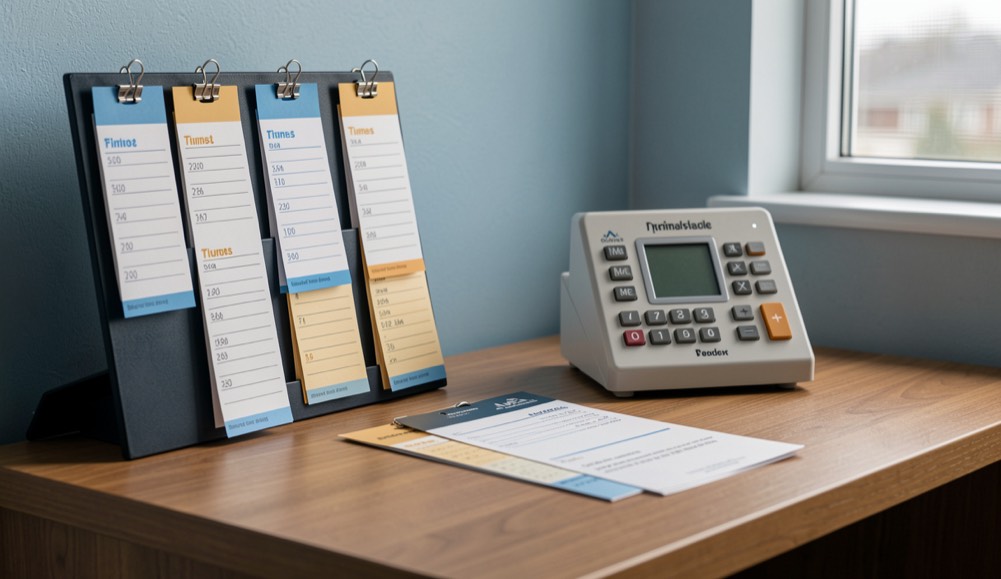
A rack makes status visible, but also requires a clear issuing and return routine.
02
Compare the record, not the silhouette
Pair this note with the clock-card guide before selecting a replacement system.
03
Read the rack as a status interface
A card or badge rack turns an invisible record into a visible workplace state. A slot, label or colour can show what has been issued, returned, missing or waiting for review. That can support a quick local decision, but it also creates an obligation to keep the labels, roster and owner current.
Start by writing the event that a person should understand at a glance. If the rack cannot distinguish issued, returned and unresolved, adding more compartments will not create clarity. The visual object needs a rule behind it.
04
Compare physical and digital status
A physical rack is immediate and can continue during a network outage, but it takes space, exposes information and depends on manual discipline. A digital status board can offer access control, search and a history, but it can hide a problem behind a login or fail when a terminal is unavailable. A hybrid requires one owner of reconciliation.
Compare how a supervisor answers a real question: who has an item, what is missing, when was it returned and who corrected the record? The answer should be fast enough for the workplace and traceable enough for a later review.
05
Prototype the daily handoff
Test the rack at the busiest moment with a new starter, a returned badge, a missing card and a correction. Check viewing distance, label size, slot order, lighting, queue space and storage for spare or retired items. Ask a person who did not design the system to explain the state from the rack alone.
For a workshop, a numbered rack paired with a short issue log may be enough. For a larger operation, the rack may be a local cue connected to a central record. The prototype shows where a physical status helps and where it needs a second source.
06
Correct the maintenance failures
Common failures include empty labels, a retired worker's badge left in a live slot, a rack moved without updating the map, and a missing item that is noticed but never recorded. Cleaning and reordering can also break a numbering convention. Give one person responsibility for the roster, labels, spare stock and exception review.
Do not replace a rack simply because it looks dated. First test whether the issuing, return and correction routine is clear. If the routine is the problem, a new shape or material will only make the same ambiguity more expensive.
07
Keep the old address in context
The historical Racks page is preserved as a doorway into visible workplace records. It is not a current catalogue, a performance specification or a recommendation for a particular badge system. Confirm present material, access, privacy, retention and installation requirements with the responsible workplace and supplier teams.
The source trail is the Wayback URL inventory and the Printroom's clock-card and workplace synthesis. Use the related article to compare the record workflow, and use the method page to understand how a historical subject is carried forward without inventing a current product claim.
08
Make maintenance part of the specification
Ask who replaces a damaged label, updates the roster, clears a retired badge and checks the rack after a move. Include spare capacity and a simple map in the workplace brief. A rack is a small piece of equipment, but its reliability depends on the same ownership and change control that a digital system would need.
Review the object after a month of real use and listen for the question people still cannot answer from it. That question is the next design improvement, not a reason to add compartments at random.
Source trail
Wayback URL inventory. Read the editorial method for the difference between a standard, an archive observation and practical synthesis.